Ongoing project
EMG-Based Target Selection in XR
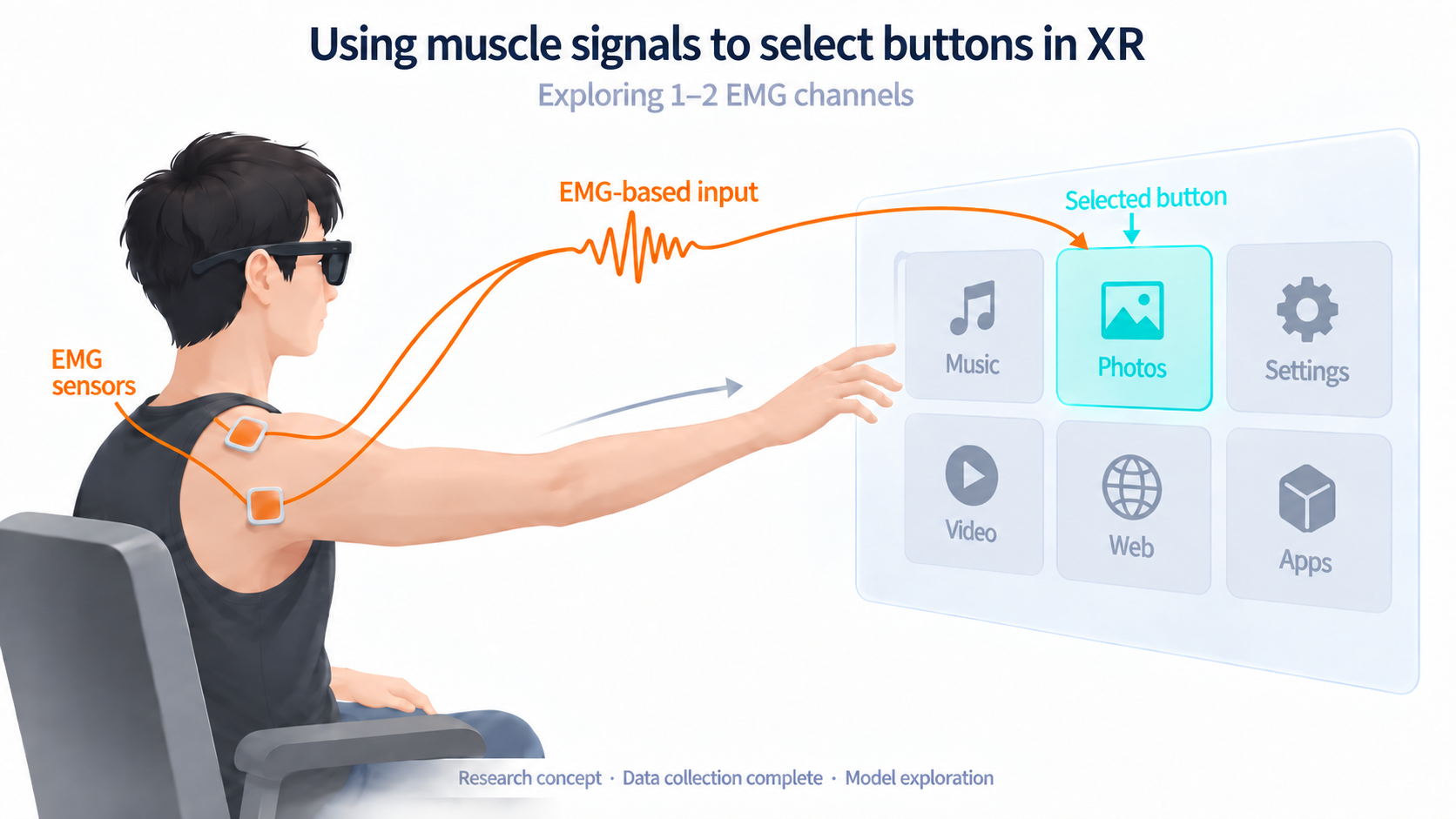
Data collection is complete. I am now exploring signal-processing and temporal-modeling approaches for EMG-based target selection in XR, using recorded motion as a training and evaluation reference.
Explore a recorded reach
Replay one selected successful development example and explore the recorded muscle signals. The saved model uses the complete S3/S8 reach to predict one target coordinate. This example does not represent average performance or live inference.
Open interactive example in a separate tab ↗Research goal
This project investigates whether EMG can support target selection in XR by identifying which virtual button a user reaches to press. The aim is to infer the target from muscle activity without relying on camera-based hand tracking during use.
Data collection
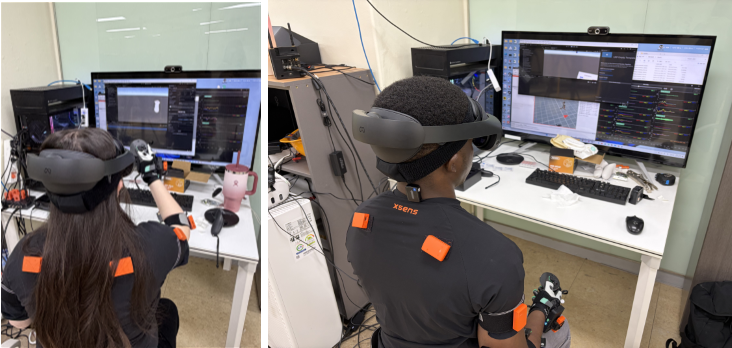
I collected EMG and motion-capture data from 29 participants performing a seated target-selection task in XR.
- Interaction
- Participants used their right hand to select a central start point, then reached toward and selected a presented target.
- Target layout
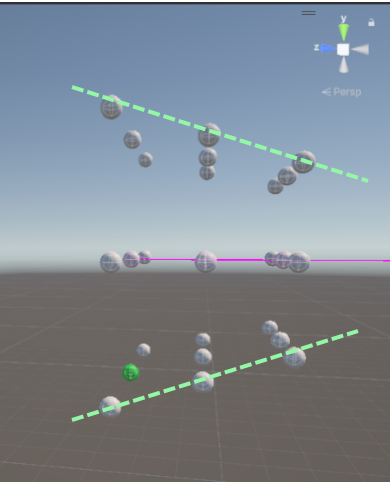
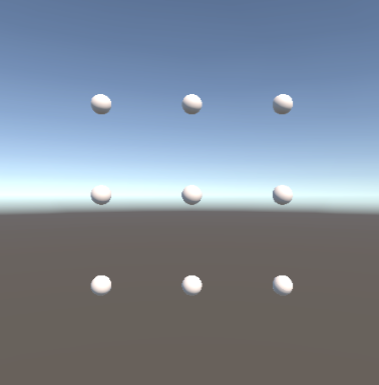
- The task covered 27 target positions, combining three horizontal positions, three vertical positions, and three depths at approximately 60%, 75%, and 90% of each participant’s arm length.
- EMG recordings
- Eight EMG channels recorded muscle activity from the shoulder, upper arm, and forearm during the reaching and selection movements.
- Motion and task references
- Xsens recorded hand, arm, and torso motion at 60 Hz to provide a reference for model training and evaluation. Task logs captured target coordinates and selection times.
Data collection examples
Current progress
Data collection complete · Signal analysis and modeling in progress
I am exploring signal-processing and temporal-modeling approaches to infer target selection from EMG, using the recorded motion as a training and evaluation reference. Working with these recordings has highlighted two challenges: substantial signal noise and differences between participants. My current focus is on handling this variability while preserving information about the target-directed movement.
Beyond recognizing targets at the recorded positions, I am investigating whether the model can support new button locations through their spatial coordinates, without collecting additional EMG examples for every location. Target-recognition performance and generalization to unseen positions have not yet been established.